How a commission works
Six stages, and no surprises in the middle.
Most people commission made-to-measure curtains two or three times in a lifetime, so it is entirely reasonable not to know how it works — and the not knowing is where the nerves come from. Here is the whole thing, stage by stage, including the parts that are easy to get wrong. It applies just as much if you end up buying your curtains from somebody else.
01
The first visit to the showroom
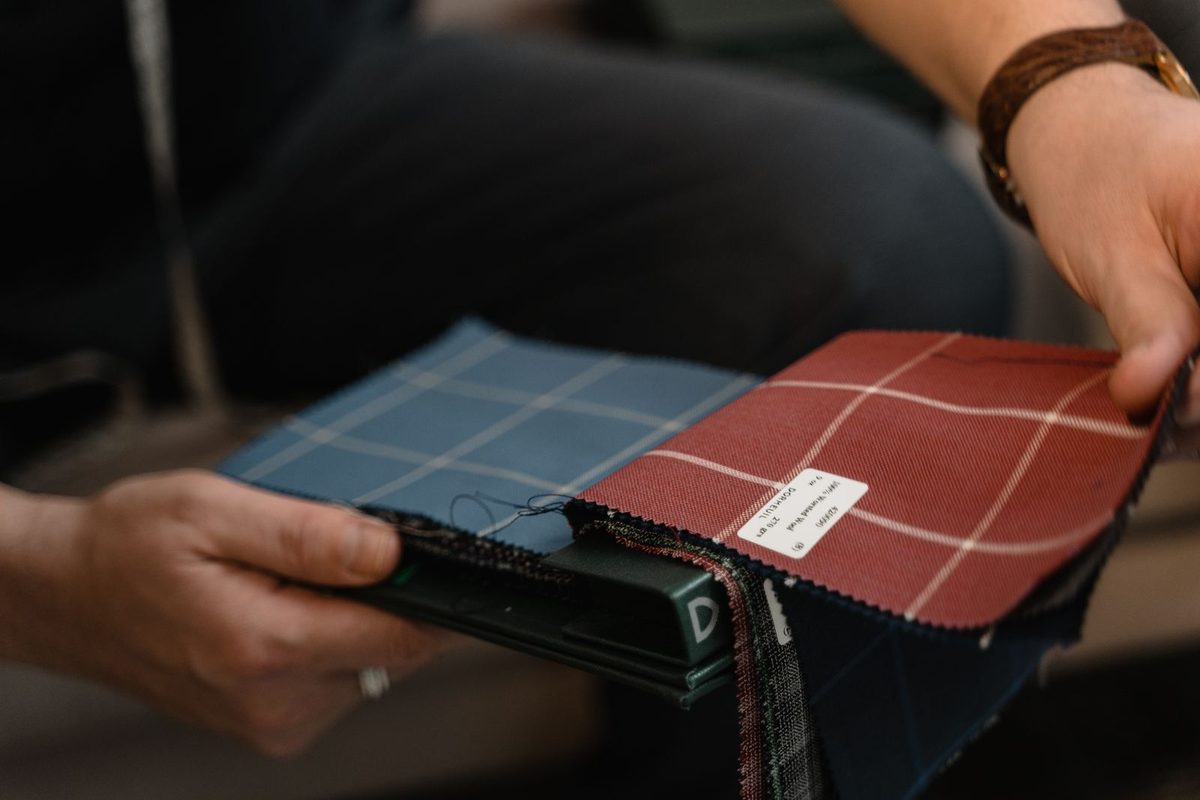
Everything starts on Brockenhurst Road with the sample books out on the table. Bring a photograph of the room, rough window measurements, and anything the scheme has to live with — a carpet sample, a cushion, the paint chart, the colour of the sofa you are not replacing. We will ask which way the room faces, how much light you want to keep, whether the window is draughty, whether the radiator sits under the sill, and whether anyone in the house needs a genuinely dark bedroom. Expect to be there the better part of an hour.
Worth knowing
Take fabric samples home and look at them on the actual window, in daylight and again at night under your own lamps. Showroom lighting flatters everything.
02
Choosing fabric, lining and heading
Three decisions do most of the work. The fabric sets the look and the drape. The lining decides how the curtain behaves — standard cotton lining, thermal lining for a cold room, blackout for a bedroom, or an interlining sandwiched in between for that heavy, expensive-looking fall. The heading decides the shape of the folds: pinch pleat, pencil pleat, wave, eyelet, or a hand-finished goblet in a formal room. We will tell you where a cheaper fabric with a good interlining beats an expensive one without.
Worth knowing
Large repeating patterns need extra fabric to match across widths and between pairs. Ask what the repeat is before you fall in love with it.
03
Measuring in your home
We come to you and measure properly. That means deciding the pole or track height and width first, not last, because the drop is measured from there — and a track set higher and wider than the window makes a room look taller and lets more daylight in. We check whether the floor is level (it rarely is), where the curtain should break at the bottom, how the bay is angled, whether the sill or the radiator dictates a shorter drop, and how a pair will stack back when open.
Worth knowing
A bay window that looks square almost never is. Anything made to sizes taken off a plan rather than off the wall tends to show it at the corners.
04
Quote, order and lead time
You get a written quotation covering the fabric, lining, making, the track or pole and the fitting, so it is clear what each part of it costs and what happens if you change the fabric. Once you are happy, the fabric is ordered from the mill and a making slot is booked. Lead times depend on the fabric far more than on the making — some designer cloths are on the shelf, some are woven to order — so we tell you the realistic date rather than the optimistic one.
Worth knowing
Order the fabric before the room is decorated if the scheme is being built around it. Paint can be matched to cloth; cloth cannot be matched to paint.
05
Making
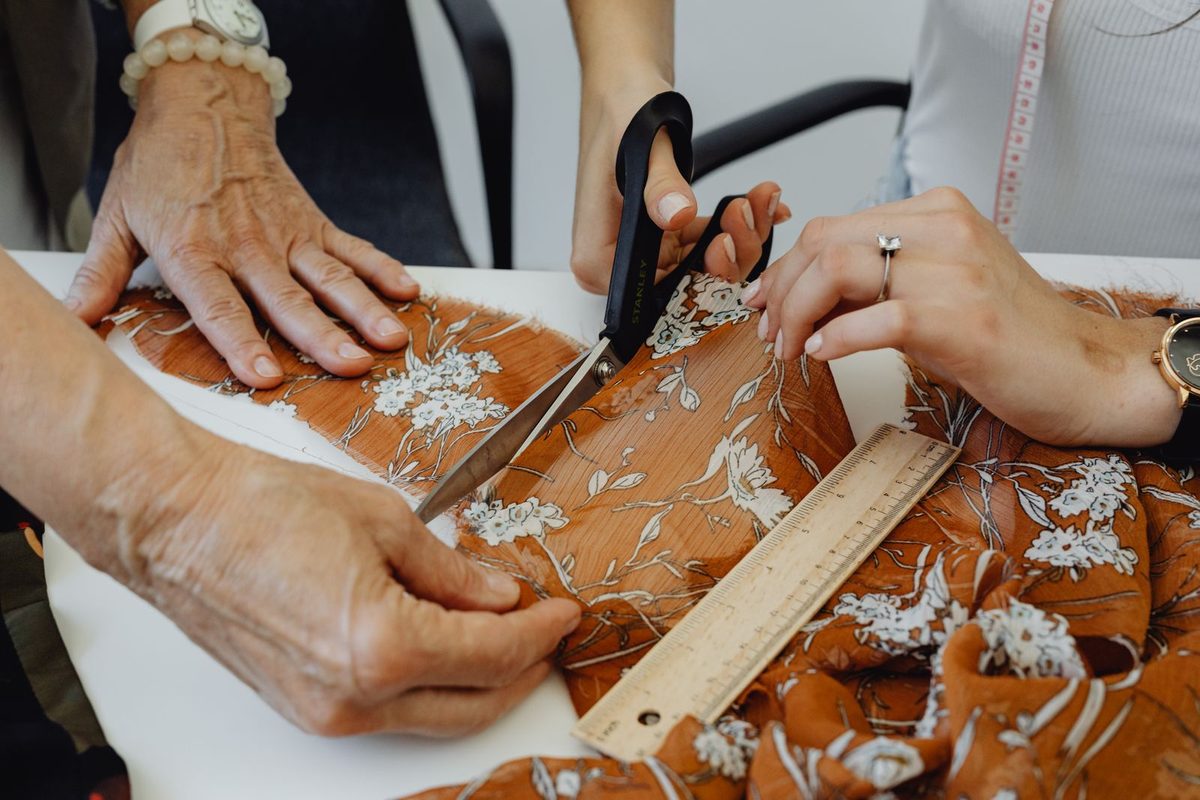
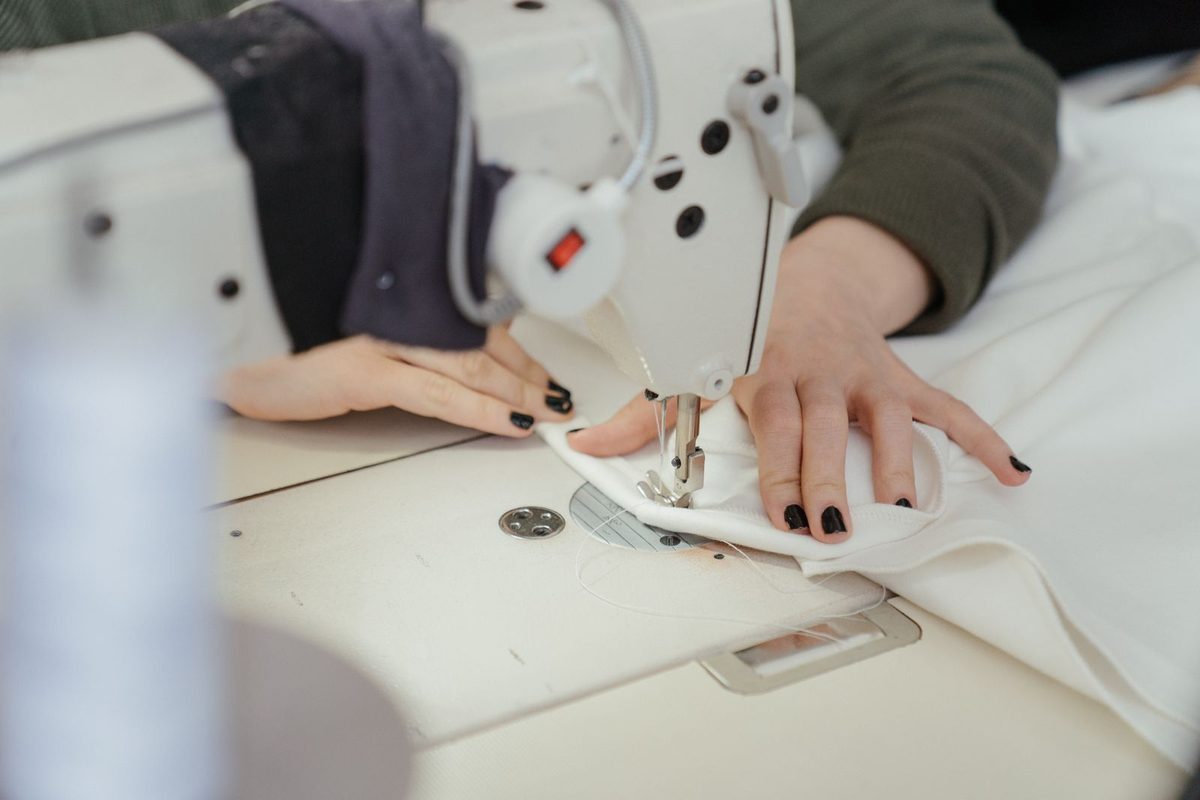
The cloth is cut to your measurements, patterns are matched across widths and between the pair, and the curtains are made up with the heading and lining you chose. Blinds are made to the same measurements, squared and weighted so they sit flat. Where we are re-covering a chair or making a bespoke piece, the frame is stripped, checked and rebuilt before a single yard of your fabric goes near it.
Worth knowing
Ask for any leftover fabric. A metre put by makes a matching cushion, a tie-back or an invisible repair five years from now.
06
Fitting and dressing
We fit the track or pole, hang the curtains, and then dress them — tying each drop into its folds and leaving it for a few days so the pleats set and hang evenly from top to floor. Blinds are levelled and their cords or motors set and tested. We take the packaging and the dust sheets away with us; the room should look finished when we leave it, not like somewhere work has just happened.
Worth knowing
Leave the ties on for the few days we suggest. It is the difference between curtains that fall in clean columns and curtains that bunch.
✦
Stage one costs nothing.
The visit to the studio and the conversation are free and commit you to nothing. Come and look through the books — worst case, you leave with an armful of samples and a much clearer idea of what you actually want.